%20(1).jpeg)
Entretiens CB 2025: organising AI adoption for sustainable growth
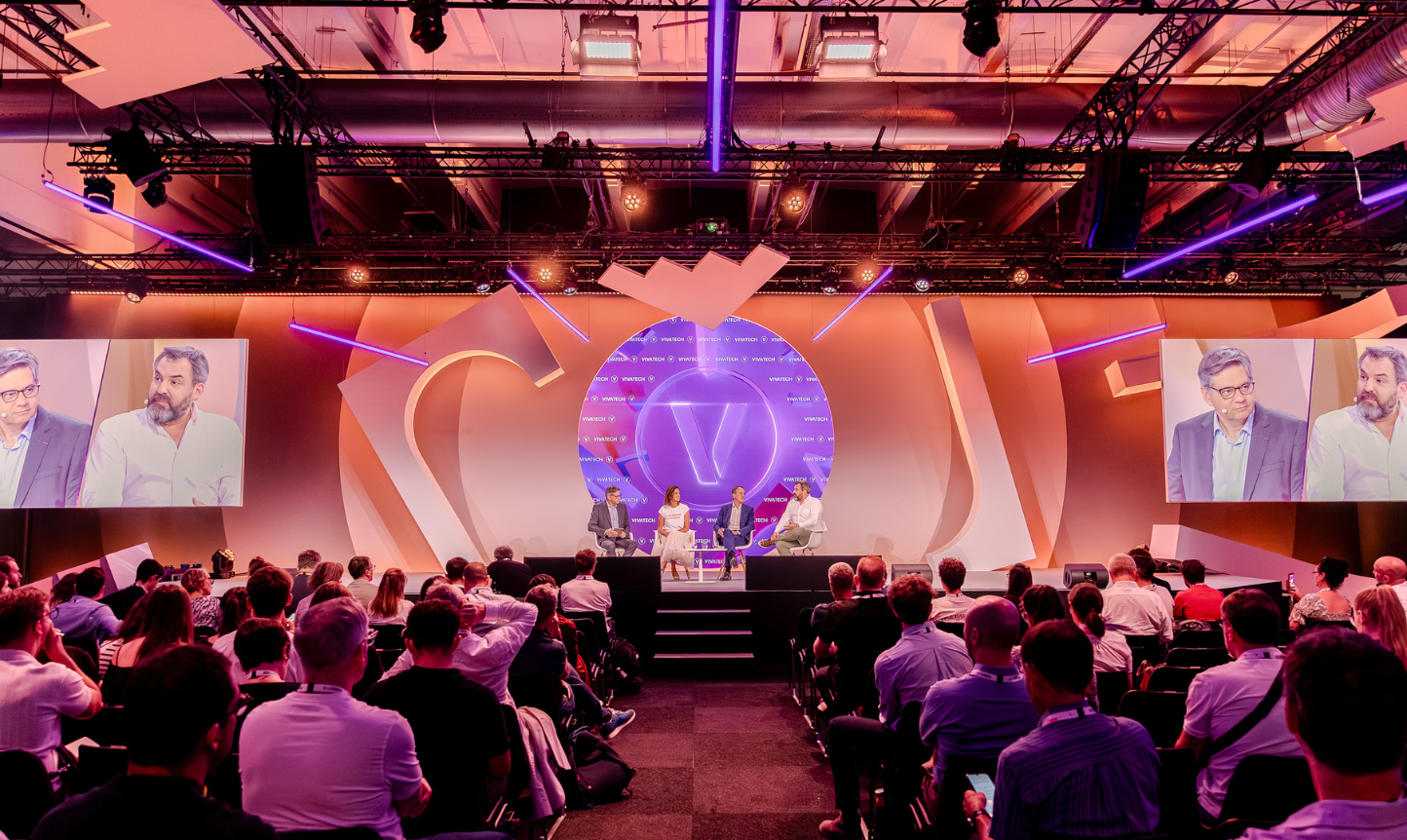
On November 20th at Entretiens CB 2025, the Human Technology Foundation took part in the roundtable “AI: Economic promises and societal concerns”.
Alongside Asma Mhalla, Benoît Jouffrey (Thales) and Valérian Giesz (Quandela), Éric Salobir stressed that the question is no longer whether AI will be adopted, but how to organise that adoption in a labour market already under strain: skills that become obsolete in just a few years, a Generation Z that can appear easily replaceable by algorithms, the risk of eroding expertise and weakening our social fabric.
AI: engine of growth or stress test for society?
In the face of rapid technological acceleration, the central question becomes: by what criteria will we judge the “success” of AI? By short-term productivity gains alone, or by its ability to generate lasting value without leaving people behind?
“Shadow AI” – the large-scale, informal uses already present within organisations – shows that society sometimes moves faster than its own structures. This energy can become a powerful lever for innovation, provided it is recognised and supported.
The European challenge and the next disruptions
For Europe, the challenge is both political and strategic: not simply trying to “catch up” in the technological race, but defining its own model, aligned with democratic values, labour law and environmental commitments. This also means anticipating the next waves now, from quantum technologies to new computing architectures and energy costs, so as not to repeat with them the mistakes made with AI.
This conviction is at the heart of the Human Technology Foundation’s work: starting from a detailed understanding of real work and the human sciences to help organisations design concrete governance mechanisms for AI, anticipate its impacts on jobs and skills, especially for young people, and inform long-term infrastructure choices.
Far from holding back progress, this approach bets on systems that enhance human capabilities rather than dilute them. Ultimately, it raises a question that is as human as it is technological: what kind of society do we want to build with AI, and under which conditions? The answer to that question will determine whether AI truly deserves to be called a force for “progress”.
Watch the replay